
After reading the comments above I have a question. I have a situation were I am not connected to the sewer system instead I have a cess pit and soak away. I have read that it is not a good idea to run washing machine waste into these tanks. What is the solution a totally separate sealed tank ?
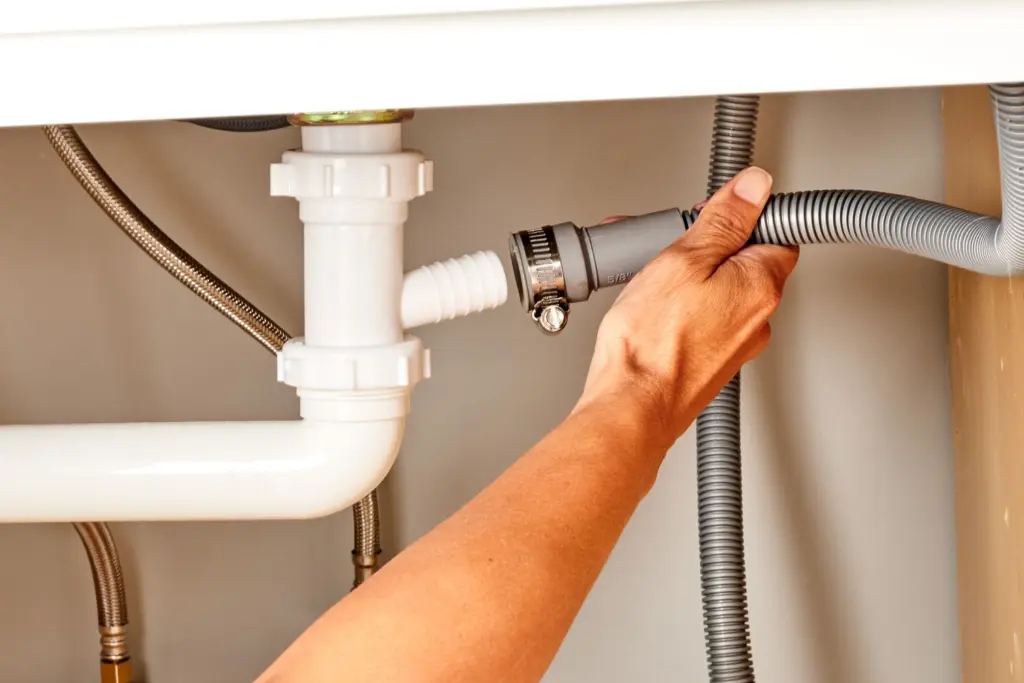
How to connect a washer or dishwasher properly
Washing machines and dishwashers must be connected to the correct drainage system. Misconnection to the wrong drain is a significant and widespread problem that sends soapy waste water directly into rivers and streams rather than the sewerage system where it belongs.
Quick Answer
Waste water from washing machines and dishwashers must drain into the sewerage system - not the surface water or storm drain system used by gutters and rainwater downpipes. Connecting to the wrong drain is illegal and environmentally harmful. This article covers how to identify correct connections and what misconnection looks like.
01Connecting a Washing Machine or Dishwasher Correctly
Connection Diagram 1 - Correct and Incorrect Connections
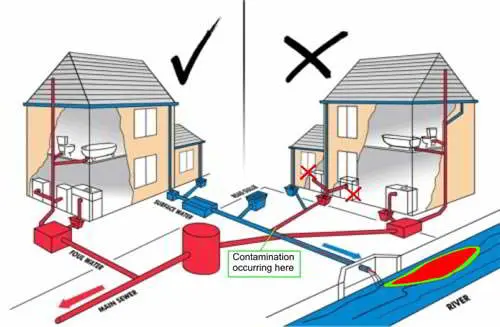
In the diagram above, the house on the left has all plumbing connected correctly. Water from gutters (shown in blue) runs through the storm drain system and into rivers. Waste water from the toilet, bath, sinks, and appliances (shown in red) runs into the sewerage system.
The house on the right is misconnected - two appliances are draining into the same drain that the gutter water uses, marked with red crosses. This means detergent-laden waste water flows directly into the storm drain system and from there into rivers and streams.
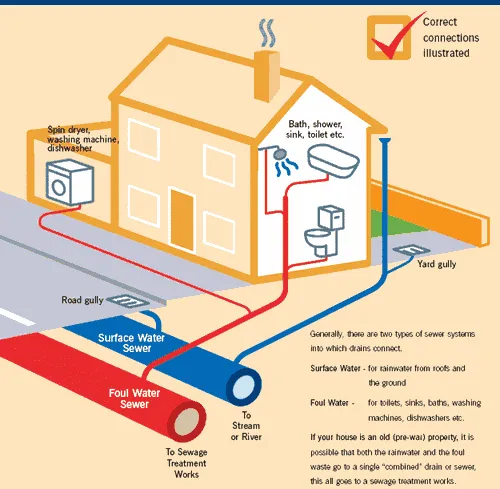
Connection Diagram 2 - How Connections Should Be Made
02The Two Drainage Systems
Most UK properties are served by two entirely separate underground drainage systems that must never be connected to each other.
Sewerage system (foul water drain)
Receives waste water from toilets, baths, sinks, washing machines, and dishwashers. This water is pumped to a treatment works where harmful substances are removed before the treated water is discharged. The external pipe serving this system is typically a large 4-inch stack pipe on the outside wall of the property.
Surface water drain (storm drain)
Receives only rainwater from roof guttering and external surfaces. This water runs untreated directly into local rivers and streams. It connects to grates at the base of fall pipes from the guttering. No waste water from appliances, sinks, or toilets should ever enter this system.
03Why Misconnections Are Common
Misconnections often happen because the two drainage systems look similar from the outside and their connections can be physically close together. The problem is particularly common in garages and outbuildings, which are rarely connected to the sewerage system. Anyone installing a washing machine in a garage and connecting the drain hose to the nearest available pipe or grate risks connecting to the rainwater drain rather than the foul water system.
Garages and outbuildings - high risk
Outbuildings and garages are almost never connected to the sewerage system. Any grate or pipe in a garage floor or at the base of guttering fall pipes goes to the surface water drain. Connecting a washing machine waste pipe to any drainage point in a garage without verifying it connects to the foul water system is likely to result in a misconnection. See our guide on putting a washing machine in a garage for what to check before installing.
04How to Check for a Misconnection
- Locate the main 4-inch waste stack pipe on the outside of the property.
This is usually a large plastic pipe (typically white or grey) running vertically down an outside wall close to the bathroom or kitchen. All waste water from the property should ultimately connect to this pipe or to an approved grate directly beside it.
- Check that no guttering fall pipes connect to the waste stack.
Rainwater from roof guttering must not discharge into the foul water system. If any fall pipe from the roof guttering connects to the main stack pipe, this is a misconnection in the other direction - rainwater overloading the sewerage system.
- Trace the waste pipe from the washing machine or dishwasher.
Follow the drain hose or waste pipe from the appliance to where it exits the property. Confirm it connects to the main foul water stack pipe or to a grate that is itself connected to that system - not to a grate at the base of a guttering fall pipe.
- Check grates near guttering fall pipes.
A grate at the base of a fall pipe receives rainwater from the roof. No appliance or sink pipe should connect to or discharge into this grate. If there is any appliance pipe near a guttering fall pipe grate, verify they are separate systems before assuming the connection is correct.
- If in doubt, consult a plumber or the local water authority.
The local water authority may be able to advise or inspect drainage connections. A qualified plumber can trace the drainage routes and confirm whether any misconnection exists.
05Consequences of a Misconnection
Environmental pollution
Waste water from washing machines and dishwashers contains detergents, bleaching agents, fabric softener, and other chemicals. When this water enters the surface water drain, it flows untreated directly into local rivers and streams, polluting the water and harming aquatic life.
Flash flooding risk
Appliance waste water discharged into the surface water system during heavy rain adds to the volume of water the storm drains must handle. Combined with heavy rainfall, this can contribute to surface water flooding in local streets.
Legal responsibility
A plumbing misconnection is illegal regardless of when it occurred or who made it. The current householder is legally responsible for ensuring drainage connections are correct. A misconnection discovered when selling a property may require correction before completion.
Installation Guides
06Two Real-Life Examples of Misconnected Plumbing
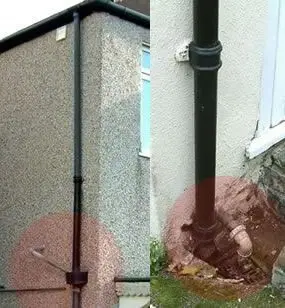
The left side of the image shows an appliance or sink waste pipe emerging from an upstairs wall and connecting into the clean rainwater drain pipe for the guttering. The right side shows the same problem occurring downstairs - most likely a washing machine plumbed in using the nearest available drain connection, which happened to be the wrong one.
This type of misconnection is easy to make accidentally, particularly when plumbing in a washing machine in a location where the nearest drain access point leads to the surface water system rather than the foul water sewer.
More on installing a washing machine correctly
07Frequently Asked Questions
Which drain should a washing machine connect to?
A washing machine must connect to the foul water sewer - the same drain that takes waste from toilets, baths, and sinks. It must not connect to the surface water or storm drain system, which carries rainwater from gutters and downpipes directly to rivers and streams without treatment.
How do I know if my washing machine is misconnected?
The most reliable way is to run the machine and check which external drain the water exits from. Water leaving via a drain connected to a downpipe or surface water gulley is a sign of misconnection.
Is it illegal to misconnect a washing machine drain?
Yes. Connecting appliance waste water to the surface water drain system is illegal under UK water regulations and environmental law. Detergent-laden waste water discharged to rivers causes significant environmental harm. If a misconnection is identified, it should be corrected as soon as possible.
Still not fixed?
Here’s where to go next.
Discussion
2 Comments
Grouped into 2 comment threads.
I’ve no experience of cess pits at all. However, I can find what looks like useful information searching Google for - connecting washing machine to cesspit (including this one https://inspectapedia.com/septic/Washing_Machine_Impact_on_Septic.php )