
How to remove stains from clothes
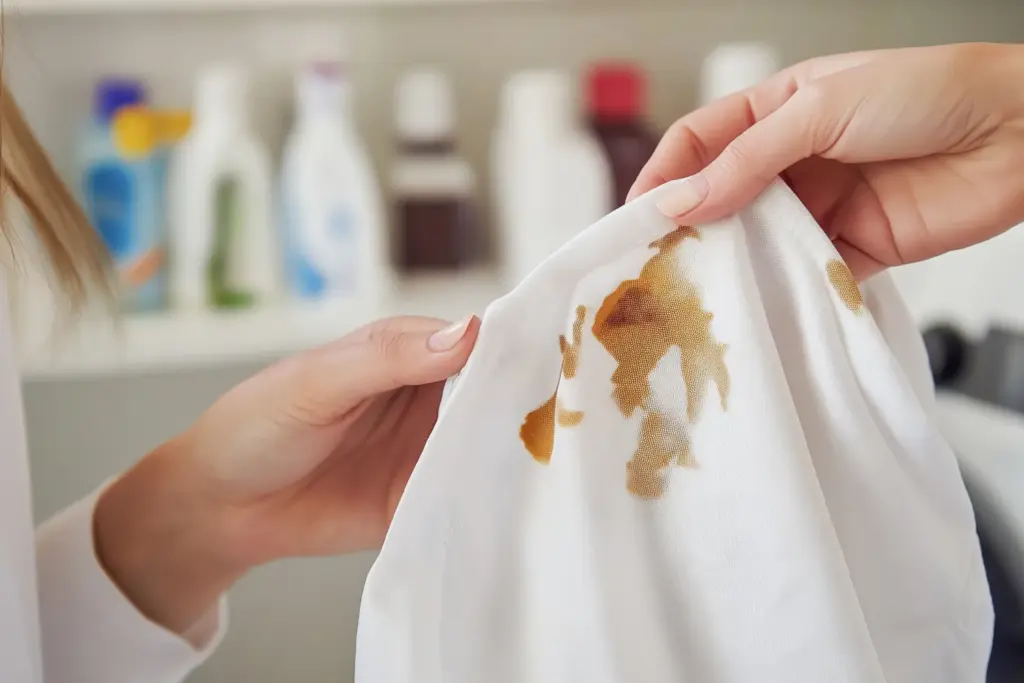
All stain treatments below should be carried out before washing normally. Do not rub so vigorously that you damage the fabric fibres - dab and blot rather than scrub wherever possible.
These methods are widely published in laundry and household guides. Always test any solvent or treatment on a hidden area of the fabric first. Use at your own risk and follow the garment’s care label at all times. Some solvents are flammable - keep away from heat sources and ensure good ventilation.
01General Rules Before Treating Any Stain
- Protein stains (blood, egg, milk): Always use cold water. Hot water permanently sets protein stains into fabric.
- Metal zips: Avoid soaking for extended periods - prolonged soaking can dissolve the adhesive holding some zip components.
- Hooks, eyes, and buttons: The cotton thread used to attach these may shrink with soaking.
- Do not soak: Wool, flameproof, elasticated, or non-colourfast garments should not be soaked to remove stains.
02Stain Removal Guide
Felt tip pen: Dab small marks with methylated spirit before washing.
Fountain pen: Rinse immediately with cold water. Wash white cottons and linens straight away. For any residual stain, rub with lemon juice, cover with salt, and leave for up to an hour - then rinse and repeat until gone. For coloured fabrics, woollens, and silk, sponge with cold water and wash normally.
Emulsion paint: Sponge fresh stains immediately with cold water. Once emulsion paint has dried it cannot be removed from fabric.
03Related Guides
04Frequently Asked Questions
Why should you never use hot water on protein stains?
Heat causes proteins to coagulate and bond with fabric fibres, permanently setting the stain. Blood, egg, milk, and similar protein-based stains must always be treated with cold water first. Once hot water has been applied to a protein stain, it becomes very difficult or impossible to remove.
Is methylated spirit safe to use on all fabrics?
No. Methylated spirit should not be used on acetate or triacetate fabrics, as it can dissolve or damage these materials. Always test on a hidden area of the fabric before treating a visible stain, and check the garment’s care label for fabric content.
Can you soak wool or flameproof garments to remove stains?
No. Wool should not be soaked - it can shrink, felt, or lose its shape. Flameproof garments should not be soaked as this can affect the flame-resistant treatment. Elasticated and non-colourfast items should also not be soaked. For these fabric types, spot treatment and gentle sponging is the safer approach.
What should I do if emulsion paint dries on clothing?
Unfortunately, dried emulsion paint cannot be removed from fabric. The only option once it has dried is to accept the stain or professionally assess whether any treatment is possible. Emulsion paint must be sponged with cold water immediately while still wet - acting quickly is the only effective approach.
Is nail varnish remover safe on all fabrics?
No. Standard nail varnish removers contain acetone, which will dissolve acetate and triacetate fabrics. On these materials, use amyl acetate instead. For heavy spills on any delicate fabric, professional dry cleaning is the safer option.
Still not fixed?
Here’s where to go next.
1 Comment
Grouped into 1 comment thread.
Also for oils and grease, rubbing Swarfega onto the affected area prior to washing can do the trick!